
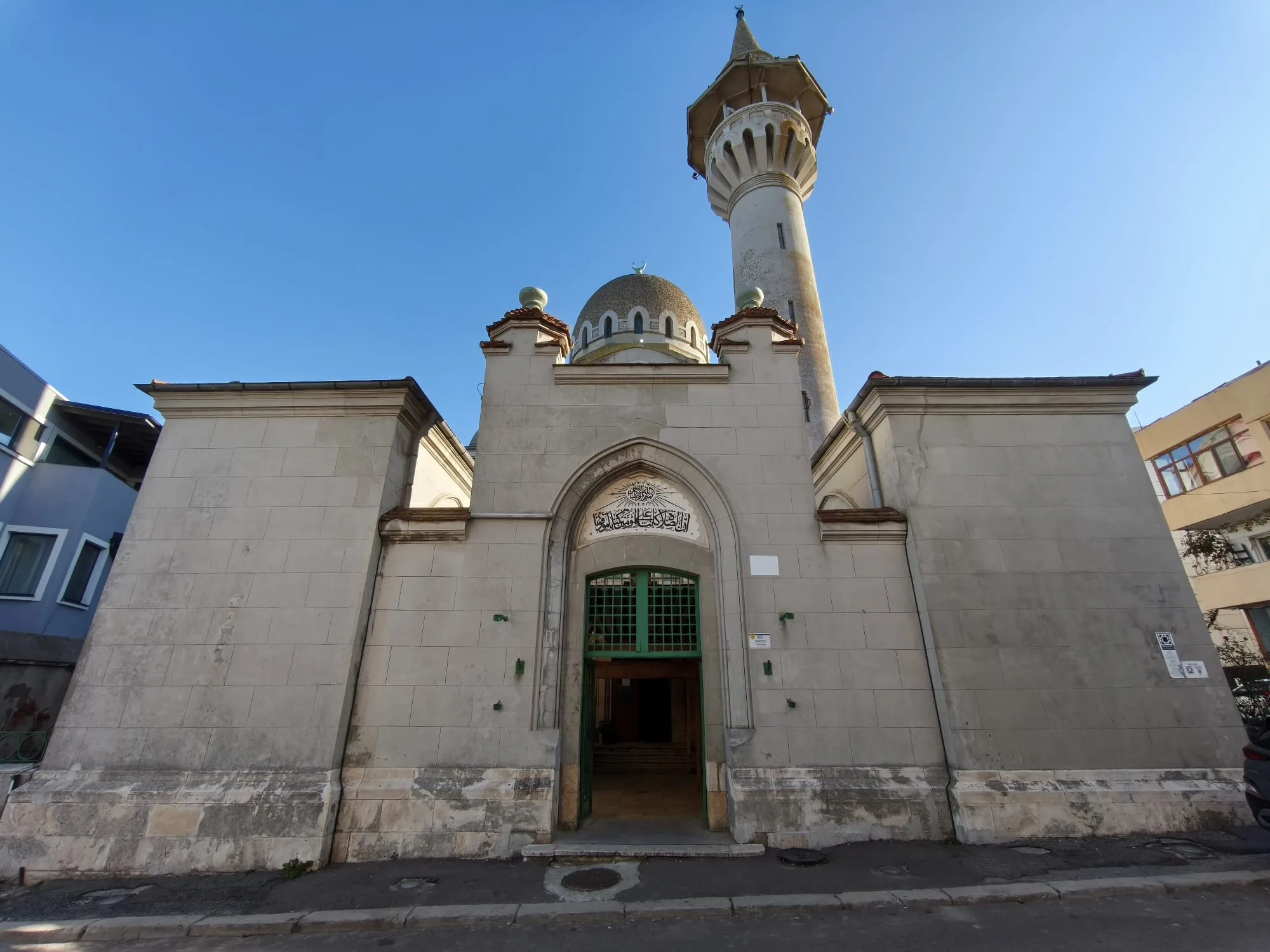
Carol I Mosque
Located in the heart of Constanța's historic district, just steps away from Ovidiu Square, the Carol I Mosque—also known as the King's Mosque or Kral Camisi—is one of the most important monuments of religious architecture in Dobruja and a symbol of the city's cultural and religious diversity.
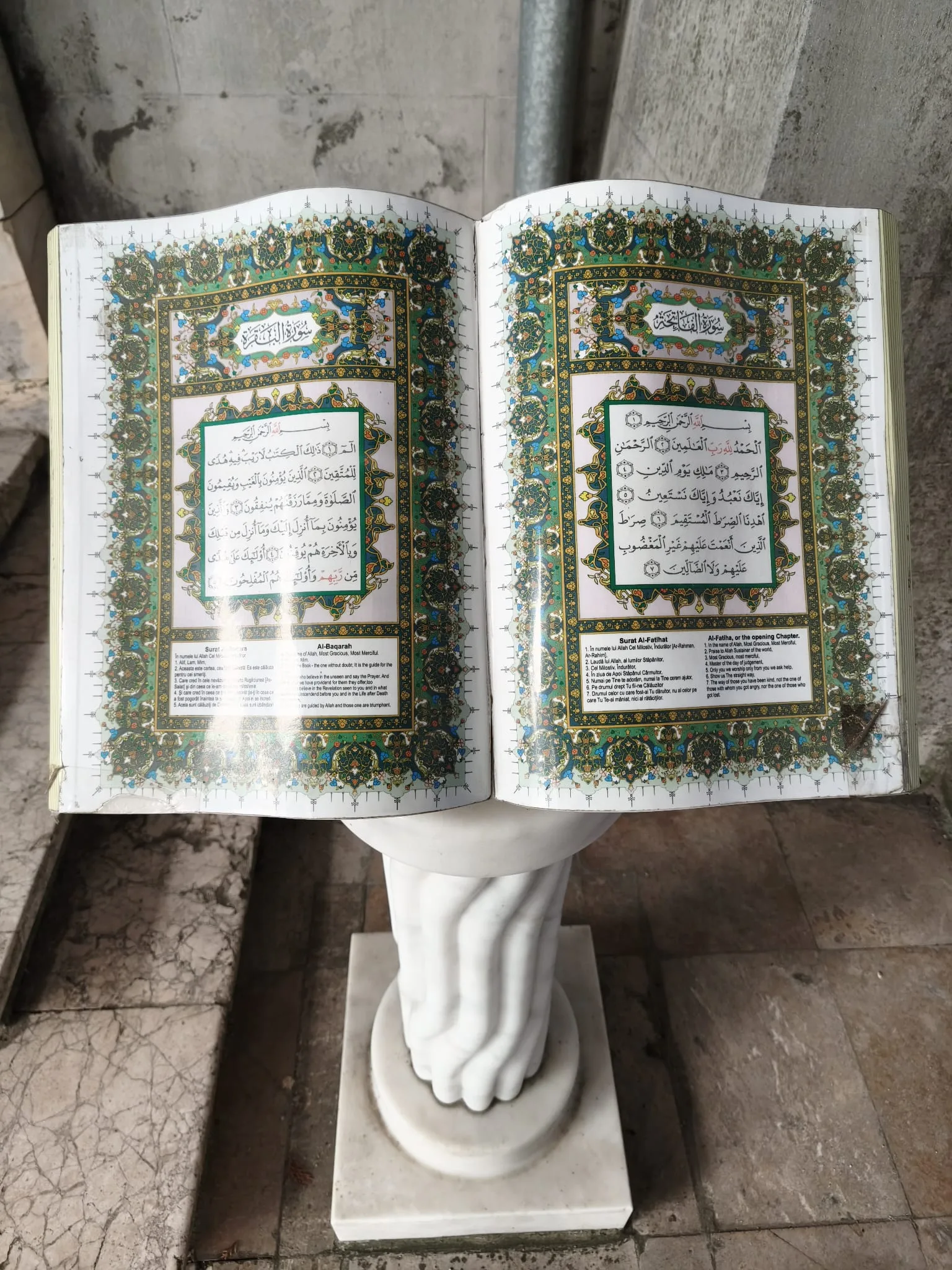
- Built 1913
- Ottoman / Islamic
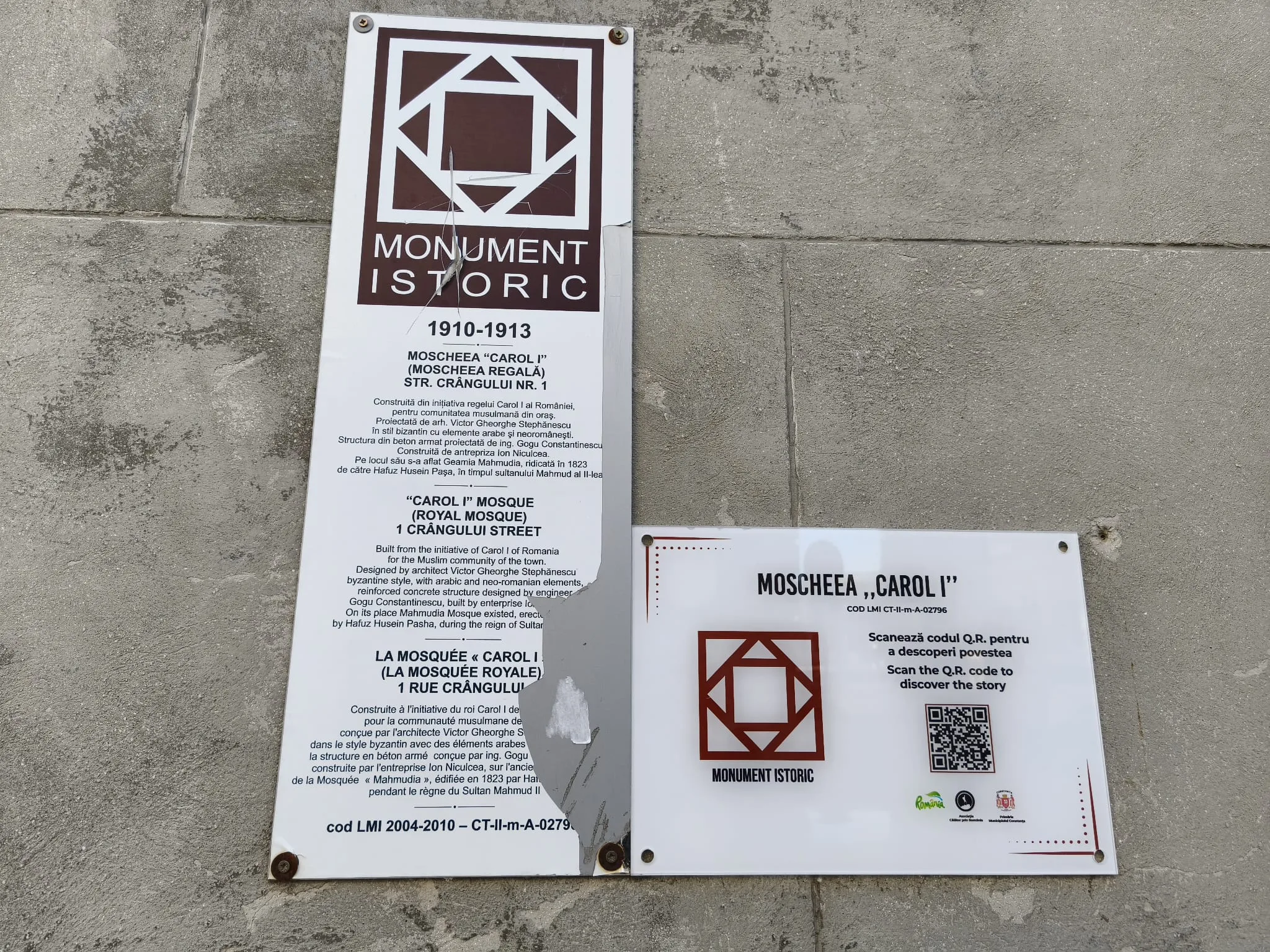
- Historic monument of national importance · CT-II-m-A-02796
About
Located in the heart of Constanța's historic district, just steps away from Ovidiu Square, the Carol I —also known as the King's Mosque or Kral Camisi—is one of the most important monuments of religious architecture in Dobruja and a symbol of the city's cultural and religious diversity.
Built between 1910 and 1913 at the initiative of King Carol I, the mosque stands as a tribute to the Muslim community of Dobruja. The edifice impresses with its monumental architecture, imposing dome, and 47-meter , which offers a panoramic view over the Constanța Peninsula and the port.
The place of worship blends Oriental, Byzantine, and Romanian architectural elements, reflecting the region's multicultural history. Inside, it preserves a valuable Oriental carpet from the former island of Ada Kaleh, one of the remarkable heritage pieces of the Muslim community in Romania.
Today, the Carol I Mosque remains an active place of prayer as well as an important cultural and tourist landmark, included on the List of Historical Monuments in Category A, of national interest.
Plan your visit
Getting there
Easy access- Road:
- Paved
- Parking:
- No
- Wheelchair:
- Partly accessible
Good to know
- Photography:
- Allowed, no flash
- Fees:
- 6 lei
- Dress code:
- Modest dress code. For women, the head and shoulders must be covered as a sign of respect.
In all Muslim places of worship, entry inside is permitted only barefoot.
360° virtual tour
Stories about this place
History & heritage
The history of the Carol I Mosque is closely tied to the development of modern Constanța and the relations between the Romanian state and the Muslim community of Dobruja.
The edifice was built on the site of an older mosque, known as Mahmudia, erected around 1822 during the Ottoman administration. At the beginning of the 20th century, King Carol I initiated the construction of a monumental mosque as a sign of respect for the Muslim community of Dobruja, which had become part of the Romanian state following the events of 1878.
The foundation stone was laid on June 24, 1910, during a ceremony attended by Minister Spiru Haret, Hafuz Rifat, diplomatic representatives of the Ottoman Empire, and local authorities. The architectural project was designed by Victor Ștefănescu, while engineer Gogu Constantinescu made an essential contribution to the design of the reinforced concrete structure. Construction works were carried out under the supervision of engineer Ion Niculcea.
The solemn inauguration took place on May 31, 1913, in the presence of King Carol I, Queen Elisabeta, representatives of the Muslim community, and numerous Romanian and Ottoman officials. The mosque also became known as Kral Camisi, meaning "The King's Mosque."
One of the most valuable objects preserved inside is the handmade Oriental carpet crafted in the renowned artisanal center of Hereke, Turkey. Associated with Sultan Abdul Hamid II, the carpet originally belonged to the mosque on Ada Kaleh Island, located on the Danube. In 1965, before the island was submerged by the reservoir created by the Iron Gates hydroelectric works, the carpet was brought to Constanța. Measuring approximately 144 sq m and weighing around 490 kg, it represents one of the most impressive Islamic heritage textiles preserved in Romania.
Throughout its existence, the Carol I Mosque has remained a landmark for the Turkish and Tatar communities of Dobruja, as well as a representative monument of the history of interethnic and interfaith coexistence in Constanța. The edifice is classified as a Category A historical monument, with the LMI code CT-II-m-A-02796, recognized for its architectural, historical, and cultural value.
Architecture
The Carol I Mosque represents one of the most interesting examples of early 20th-century religious architecture in Romania, bringing together Arab-Byzantine, Moorish, and Neo-Romanian influences.
The architectural concept, created by Victor Ștefănescu, drew inspiration from the Islamic architecture of Anatolia, with the Great Mosque of Konya in Turkey cited as a model.
The edifice stands out for its innovative use of reinforced concrete at a time when this technology was still in its infancy in Romanian architecture. Engineer Gogu Constantinescu contributed to the construction of the dome and minaret structure, making the Carol I Mosque one of the benchmark buildings for the early use of reinforced concrete in Romania.
The main body, covering an area of approximately 450 sq m, is built of stone and brick. The prayer hall is topped by a dome with a diameter of about 8 meters and a height of around 25 meters.
The minaret, built in the Moorish style, stands approximately 47 meters tall and features an interior spiral staircase with 140 steps. This leads to the circular balcony from which the once called the faithful to prayer.
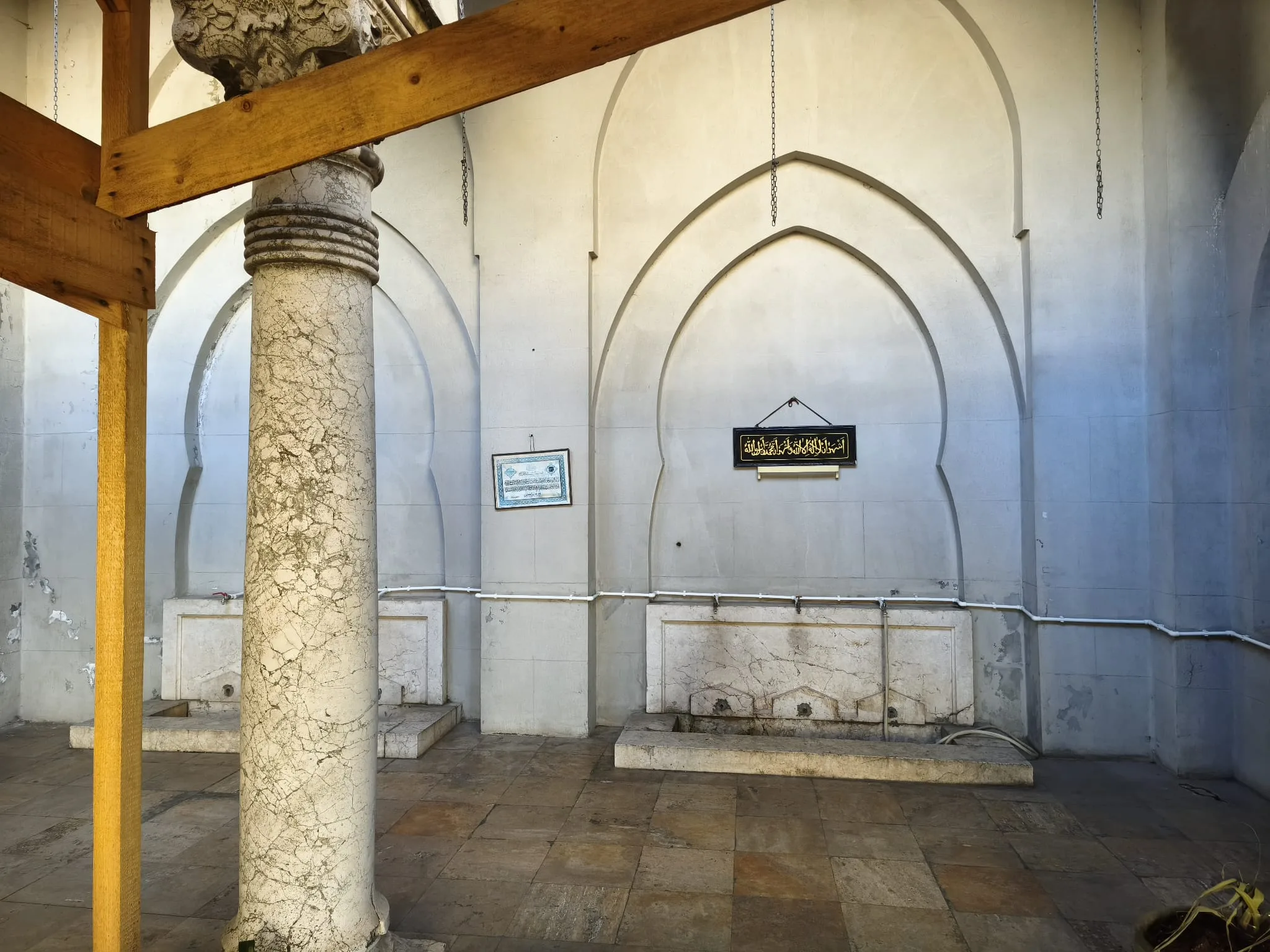
Access to the complex is through a monumental portal made of Dobruja stone. The inner courtyard is bordered by porticoes and includes spaces designated for , the purification ritual performed by believers before prayer.
The entrance to the prayer hall is marked by decorative elements in black marble and bronze, while the interior is distinguished by a color palette dominated by blue, green, ochre, and red. The walls are adorned with geometric motifs, colored ceramic tiles, and Arabic calligraphic inscriptions featuring Quranic verses and divine names.
A central element of the prayer space is the mihrab, the niche indicating the direction of Mecca. Alongside it are the minbar, the pulpit used for the , and the kürsü, intended for religious readings and teachings.
Inside, the large Oriental carpet from Ada Kaleh Island also stands out, completing the artistic and heritage value of the edifice. Through its architectural synthesis and constructive solutions that were modern for its era, the Carol I Mosque stands as an example of the meeting between Islamic tradition, Byzantine influences, and early 20th-century Romanian architecture.
Photo gallery
Reviews
No reviews yet. Be the first to share your visit.
Similar places
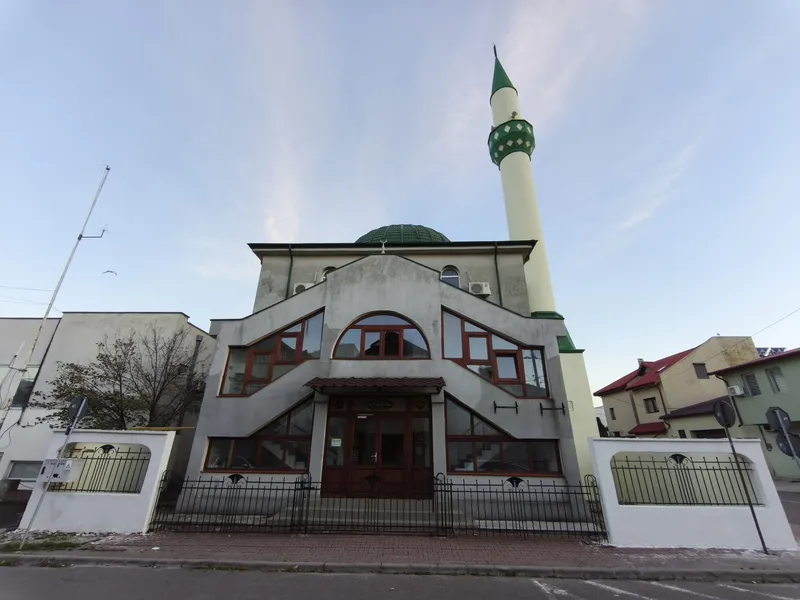 Geamia Kumluk ConstanțaGeamia Kumluk, cunoscută și sub denumirea de Geamia Chiliei, este un lăcaș de cult musulman situat în Piața Chiliei din Constanța, pe strada Timișana. Cu o istorie religioasă documentată încă din perioada comunistă, geamia reprezintă un reper spiritual și cultural al comunității musulmane locale și al diversității confesionale dobrogene.
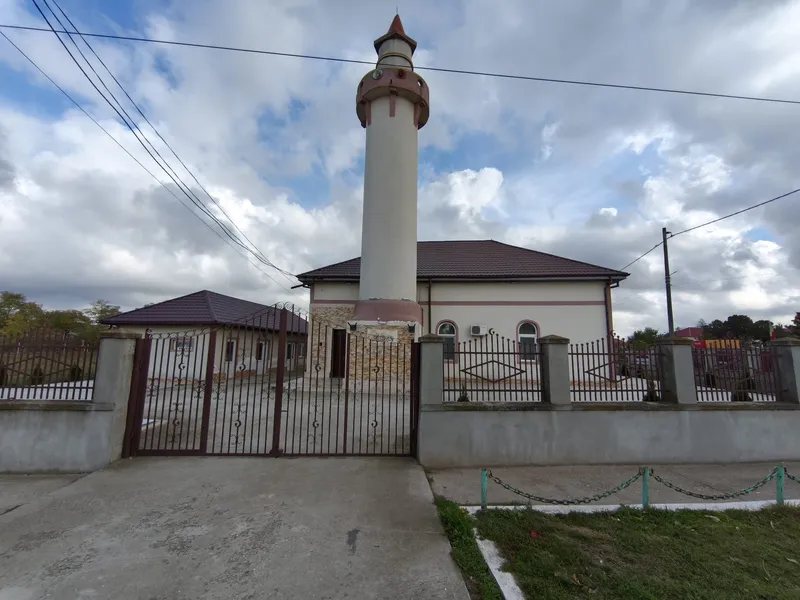 Geamia din Cobadin ConstanțaGeamia din Cobadin este un lăcaș de cult musulman situat în comuna Cobadin, județul Constanța, reprezentând un important reper al comunității turco-tătare locale.
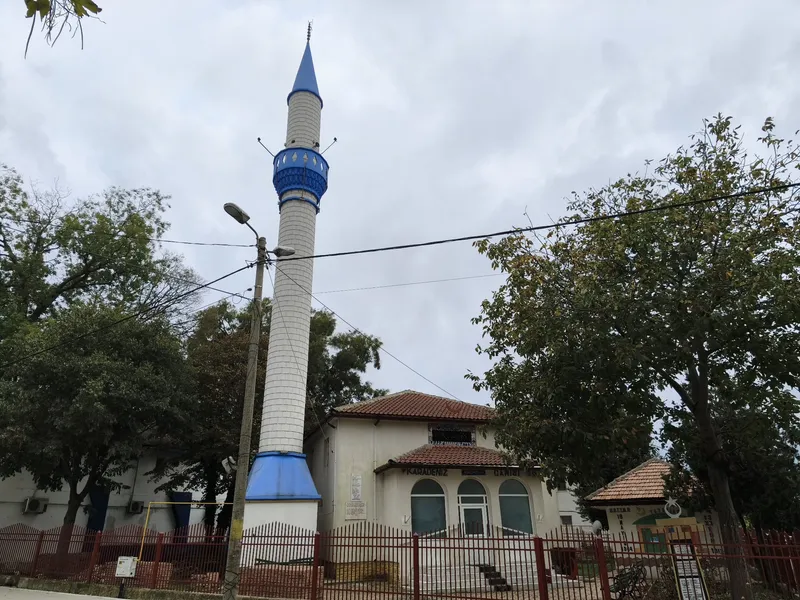 Geamia din Eforie Sud - Karadeniz ConstanțaGeamia din Eforie Sud este un lăcaș de cult musulman construit la începutul secolului al XXI-lea, destinat comunității turco-tătare din localitate.